Let's talk about your monitoring challenges.

Tell us what you need to improve, and our team will help you identify the best solution for your infrastructure.
*Mandatory fields
Oops! Something went wrong while submitting the form.
Tell us what you need to improve, and our team will help you identify the best solution for your infrastructure.
Find out how BIND and Custos Monitoring leveraged Zabbix for monitoring to optimize visibility, integrate inventories, and automate incident responses.

Zabbix monitoring at BIND has evolved alongside the organization’s needs and our collaboration with Custos Monitoring.
In October 2025, BIND shared part of that experience in “Visibility That Drives Your Business”, an event organized by Custos Monitoring in Montevideo. There, Leandro Pellegrino presented “When Monitoring Speaks the Language of Business, ” raising a challenge that would become one of the cornerstones of this journey: connecting technical information with business needs.
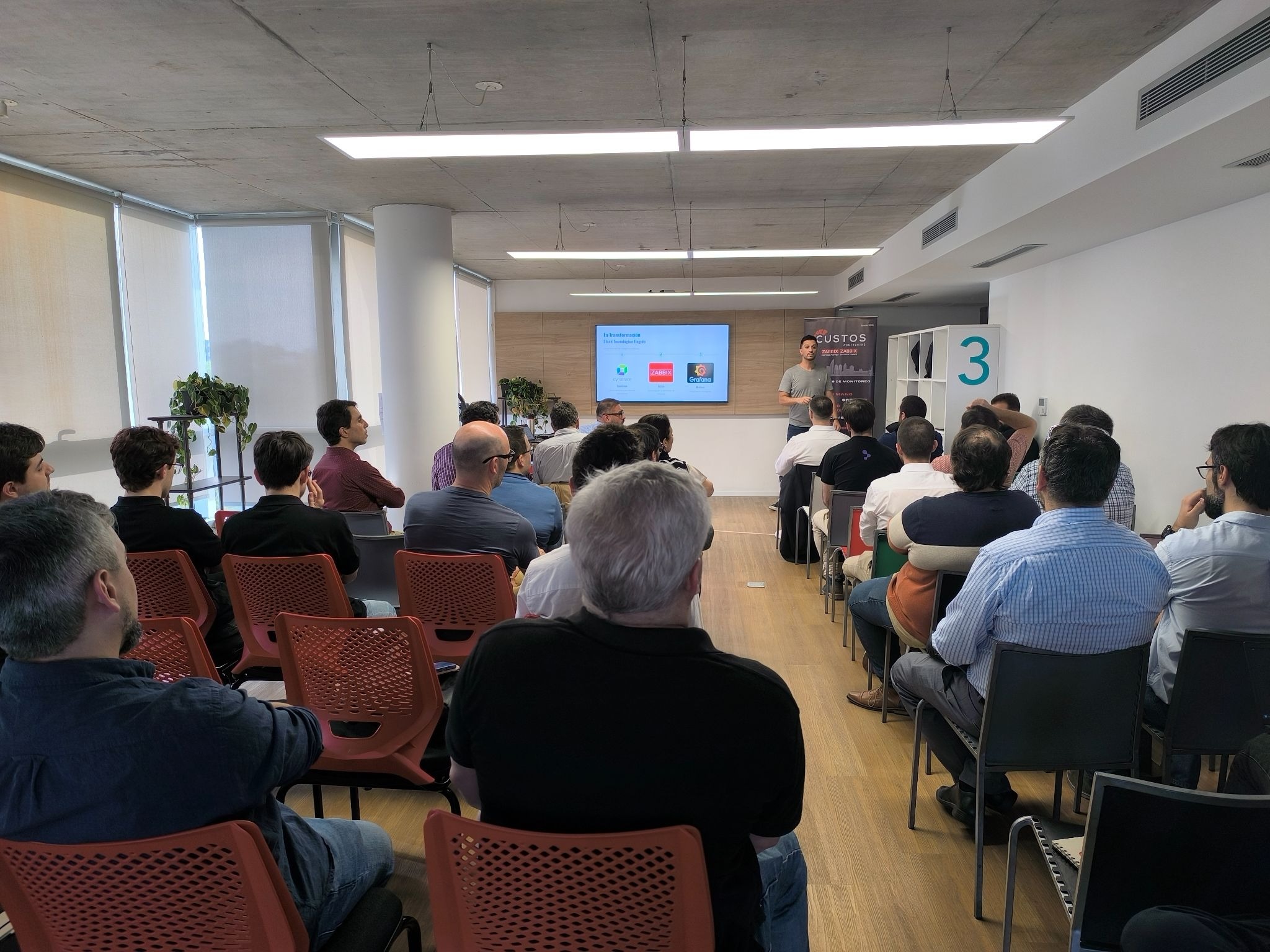
Months later, in May 2026, that experience was shared at the Zabbix Conference Latam 2026 in Brazil, where Gustavo Guido, Director of Monitoring at Custos, and Leandro Pellegrino, Head of Monitoring and Observability at BIND, presented “When Monitoring Speaks the Language of Business: The BIND Argentina Case Study.”
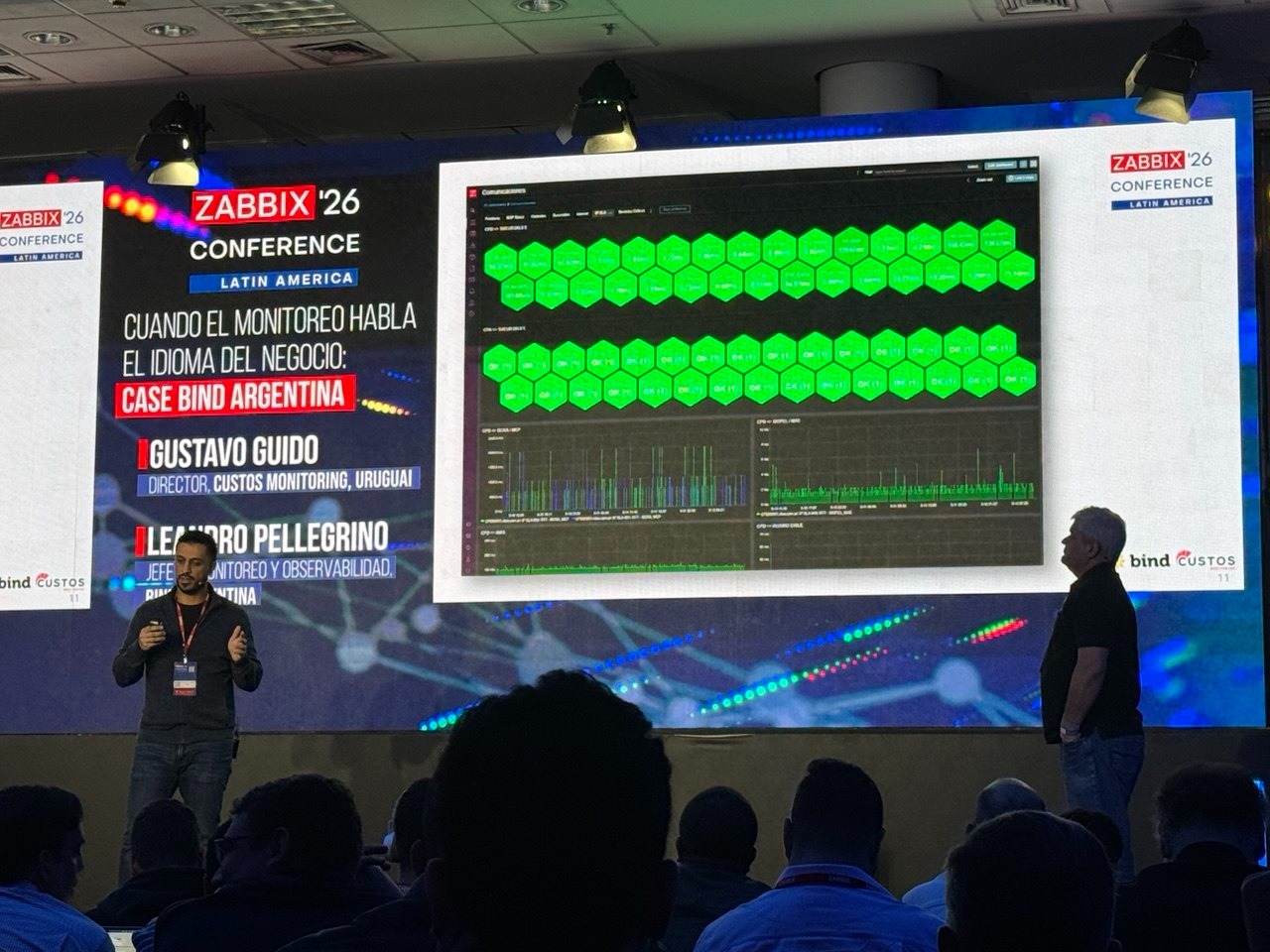
There, they discussed the project's progress and how monitoring gradually evolved from being exclusively a technical tool to becoming increasingly integrated with the operational needs.
In August 2026, Zabbix documented part of this journey in the case study “From 3,500 Metrics to 100% of the Infrastructure Monitored: BIND’s Transformation Journey with Zabbix”, which details the evolution of monitoring over three years of work and some of its key results.
But the story didn't end there.
There are the results, and there is the journey: needs that emerged as the monitoring process became integrated and shed light on the operation, and the solutions that arose from the joint efforts of the BIND and Custos teams.
The analysis and the work gave rise to new questions and concerns that had not been apparent at first glance:
Among other things, those questions ushered in new phases, shifted priorities, and established goals and milestones along the way.
A common pattern began to emerge in the responses:
First, understand the business need; then, develop the technological solution.
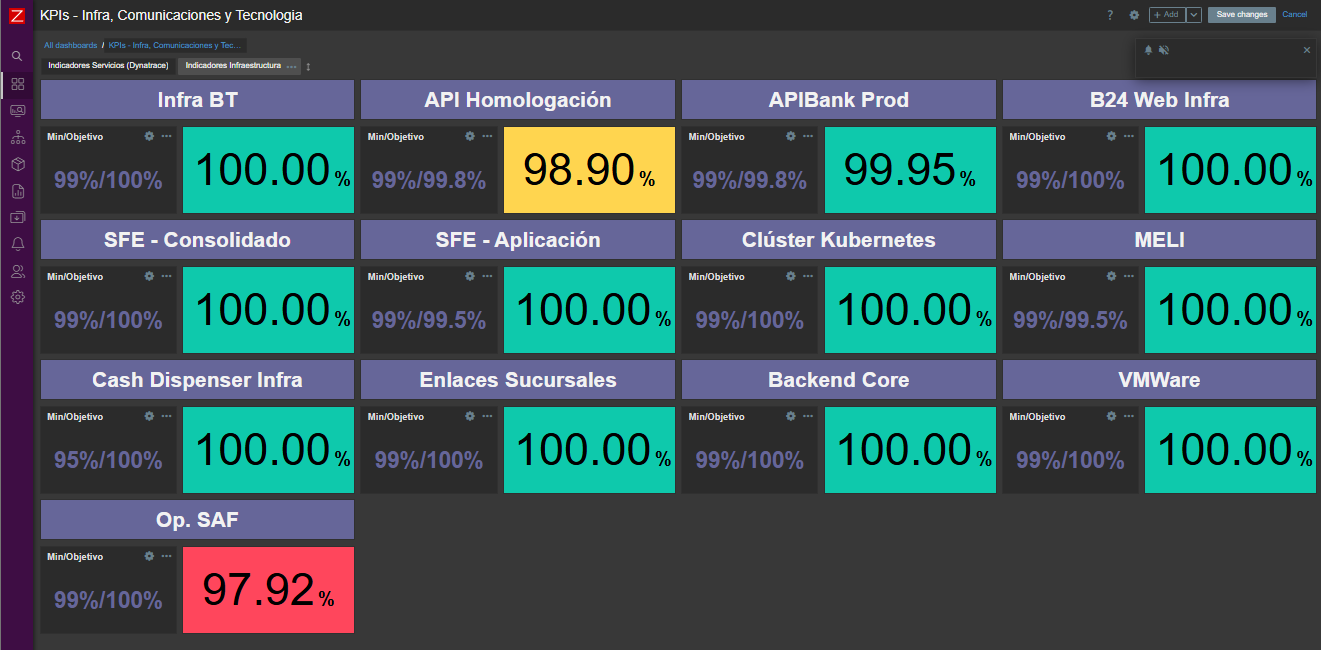
BIND is an Argentine organization in the financial sector with a technology ecosystem that supports various services, processes, and business areas.
When the project began, BIND had metrics, alerts, and dashboards that didn’t quite meet its needs.
In the words of Leandro Pellegrino: “The truth is, I wanted Zabbix, but I chose Custos because I believed—and now I can confirm—that they’re the best in the Spanish-speaking world.”
The starting point wasn’t to implement a monitoring tool; it was to understand the business’s needs and adapt the monitoring to meet them. The value of monitoring was already established, but the objectives weren’t being met.
They needed a clear picture of what was happening within their technology ecosystem and to transform the data into useful information for operations and decision-making.
There were warnings; we need to turn them into a systematic approach and identify actions to address the root cause.
Data existed; it must be transformed into information that enables us to understand and make informed decisions and investments.
"See More" also allows you to discover what you couldn't see before, reveals blind spots, and helps you realize that you lack the information needed to draw conclusions.
An alert indicates that something is wrong, but that doesn't necessarily mean it explains what's wrong, what the immediate solution is, what the permanent solution is, or how it affects other areas.
Part of the work involved enhancing the metrics, conditions, and alerts to provide more context about the actual problems.
The goal was to move forward from:
“There’s a problem.”
to:
“This is the problem; this is what we’re seeing, and this is where we need to focus our attention and take action.”
That increased visibility made it possible to shed light on aspects that were not immediately apparent.
BIND had the data, but having data doesn't always mean understanding what's happening; you have to turn it into information, perhaps discard some of that data, obtain new data, and adjust harvesting conditions and alerts.
This process had an additional effect.
When an organization begins to see more clearly and to understand, it starts asking new questions.
Some needs that arose during the project had not been identified at the outset.
They emerged from the path we had taken, from the information that began to become available, from the issues that began to come to light, and from new situations that the operation brought to light.
Thus, greater visibility led to solutions for the initial needs and served as the starting point for discovering new opportunities for integration, access to information, and the simplification and automation of processes.
The project began to expand.
As work evolved, it gave rise to new opportunities, better solutions, and a deeper understanding.
Every situation led us to the same question:
What does BIND need to resolve?
Two types of expertise must come together: business expertise and expertise and experience in monitoring.
People who work within an organization are familiar with its processes; they know what information they need, what behaviors are expected, what situations require attention, and what impact a problem might have.
That's what business acumen is all about.
On the other hand, there is specialized knowledge in monitoring: how to translate those needs into metrics, conditions, alerts, integrations, automations, or specific developments.
The collaboration between BIND and Custos involved bringing these two areas of expertise together.
BIND could identify the need based on its operations.
Custos was able to translate it into a technological solution.
The challenge wasn't to get the business to learn the language of monitoring.
The goal was to ensure that the monitoring system could provide responses in business terms.
BIND has an inventory tool, while Zabbix had information about the items it was monitoring.
Keeping those two worlds separate meant duplicating the work, with the risk of discrepancies arising between the two systems.
The need, then, was not simply to “integrate Zabbix.”
She was more specific:
to avoid having to enter the same information twice and to ensure that both systems could complement each other.
Based on that need, a system was developed that integrates monitoring and inventory.
The information available in Zabbix could feed into the other system, reducing the need to manually maintain the same data in different places.
But when I connected both sources, a second value appeared.
The cross-check made it possible to identify items monitored by Zabbix that were not listed in the inventory and, conversely, assets listed in the inventory that were not being monitored.
The differences between the two systems raised questions about the operation:
Should that asset be monitored?
Was it decommissioned but is still listed?
Is there something that the monitoring system is detecting but hasn't been added to the inventory yet?
An integration that was initially designed to simplify information management ended up providing a new way to ensure the consistency of the environment.
It taught us another lesson: within an organization, systems may serve different functions, but the information they contain is part of the same reality.
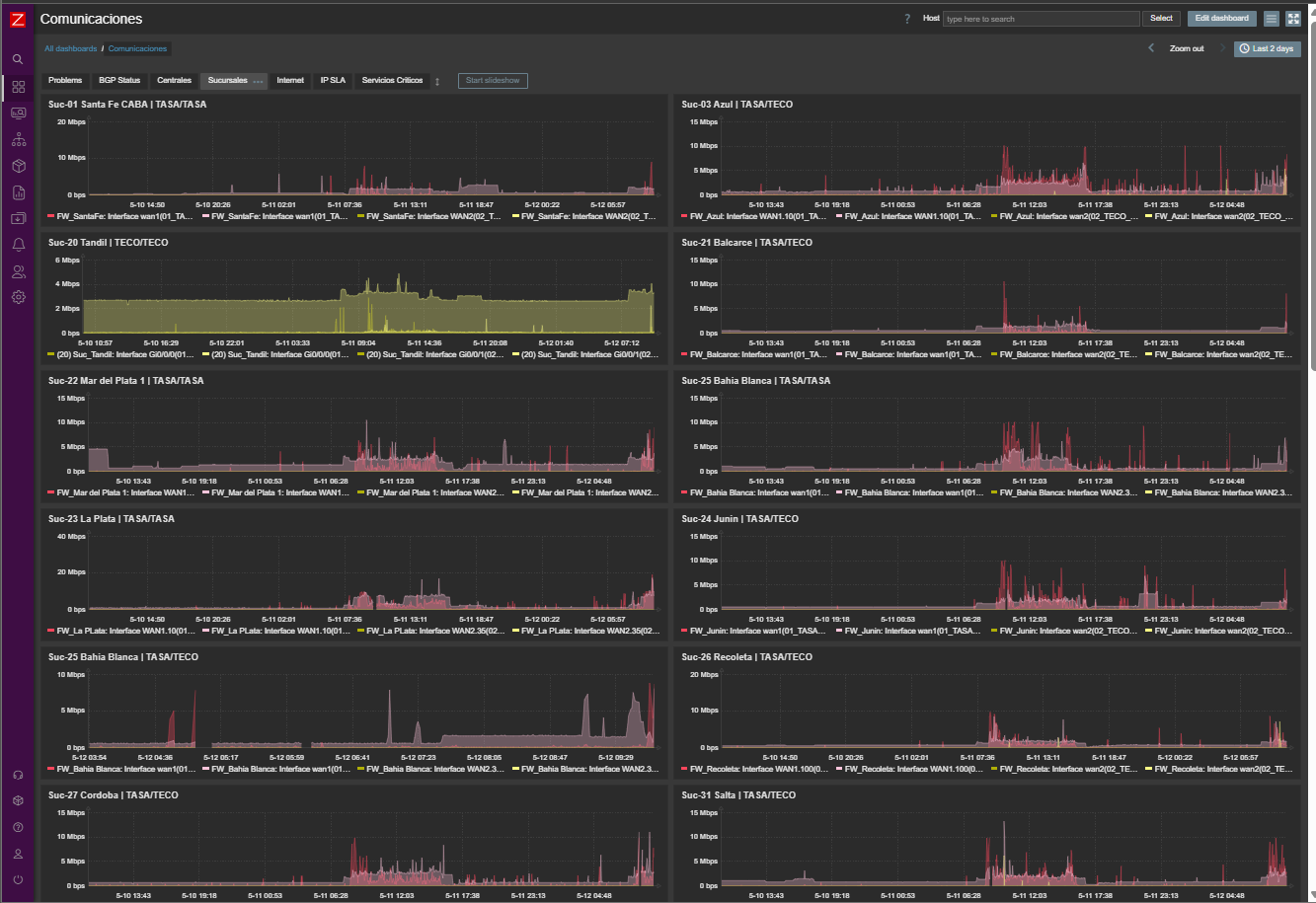
Another challenge was making the available data accessible.
An incident doesn't always catch the person responsible sitting at a computer; it might find them in a meeting, on the move, or simply away from their workstation.
When an alert appears, the first decision to make is:
Does this require me to take action now?
To answer that question, it isn't always necessary to log in to the entire monitoring platform; often, it's enough to have access to the relevant information in summary form.
Based on that need, a bot integrated with Telegram was developed.
From a mobile phone, an authorized user can view monitoring data and access graphs that have been flagged as relevant.
That allows you to gather more context before deciding what to do.
A person can assess whether they need to get in touch immediately, whether the situation requires urgent attention, or whether it can wait.
The technical complexity remains in the background, hidden from the user; the experience is much simpler and more straightforward:
I received an alert; I need to understand what’s happening, and I can look up information right where I am.
In addition, each user can only access the information that their permissions allow them to view.
It wasn't necessary to turn the user into a Zabbix expert; instead, the information from Zabbix was presented to the user in a way that translated technical jargon into the user's own language.
That development raised another issue.
A person may know exactly what they need to know about their business without knowing the name of the item, trigger, or metric that contains that information within a monitoring platform—they don't need to know it.
The important thing is that you be able to express what you need to know and receive the information that will allow you to understand a situation.
The technological challenge lies in carrying out that translation.
Behind the scenes, there are metrics, conditions, charts, queries, permissions, and connections between devices; on the front end, there’s an experience that makes sense to those who need it.
This principle runs through various aspects of the project:
—not making people adapt to the tool, but adapting the tool to the way people need to work.
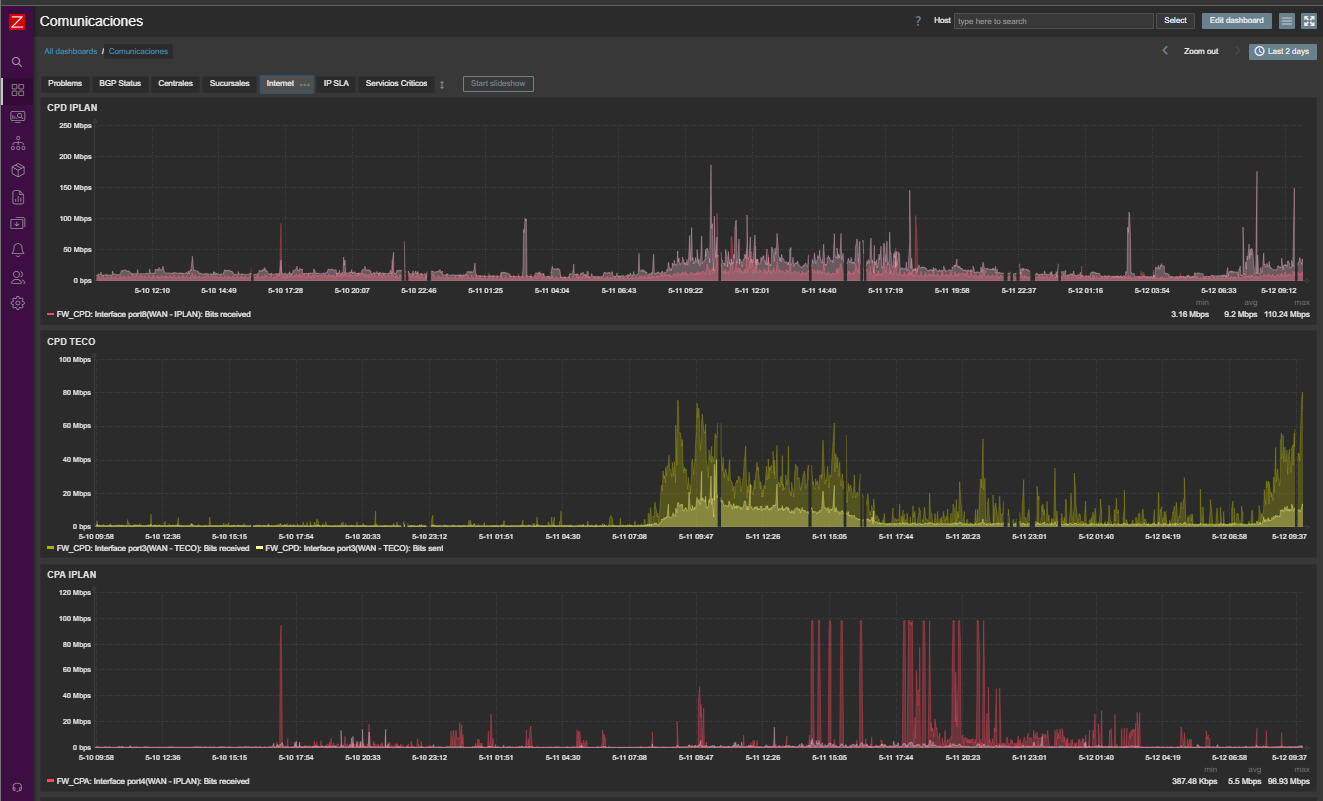
The same logic applied to an everyday situation.
Certain users needed to report that an asset was about to undergo maintenance.
For monitoring purposes, it is important to know this status; if an intervention is already planned, generating and distributing alerts related to it may result in unnecessary work.
But from the user's perspective, a much simpler question arose:
Why would anyone need to learn how to use Zabbix just to report maintenance?
A solution was developed that allows users to manage the maintenance of the assets under their responsibility without having to interact directly with Zabbix.
The person performs the necessary action, and the monitoring system receives the corresponding information.
During that period, notifications related to a anticipated situation are avoided; when maintenance is complete, if the problem persists, it once again becomes a situation that requires attention.
All that's left for the user is to do what they need to do.
Complexity lies behind the solution.
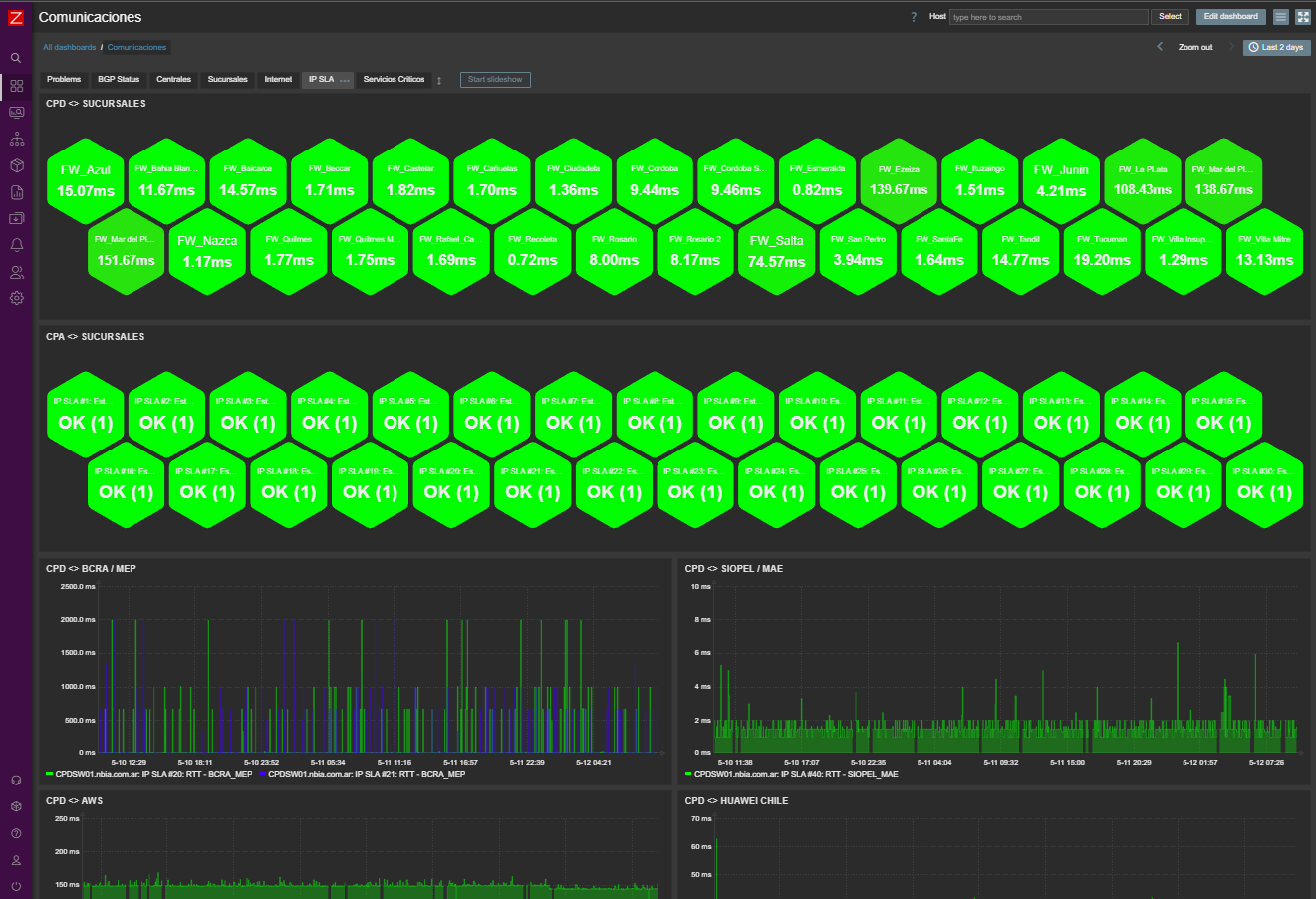
Automate before involving a person.
As the project evolved, processes began to be identified in which an initial human intervention was not always necessary.
In certain situations, BIND needs to retrieve information from external APIs at specific times.
If a piece of data is not available on the first attempt, the system can take the following actions.
If those measures do not resolve the situation, a person is called in to intervene.
Automation, in this case, does not seek to replace human judgment; rather, it seeks to determine when that judgment is truly needed.
If an action can be resolved automatically, the system may try that first.
If the situation calls for analysis, a decision, or intervention, then a person gets involved.
The idea behind these types of solutions is simple:
to reserve people for situations where a person is truly needed.
Automate the response as well
Detecting a problem is only one part of incident management.
After the alert, another process begins.
We must ensure that the information reaches the right person, verify that someone has acknowledged it, and, if there is no response, move on to the next person in charge; we must establish a chain of command that gradually involves those who can take appropriate action.
The challenge was to incorporate part of that process into the system itself.
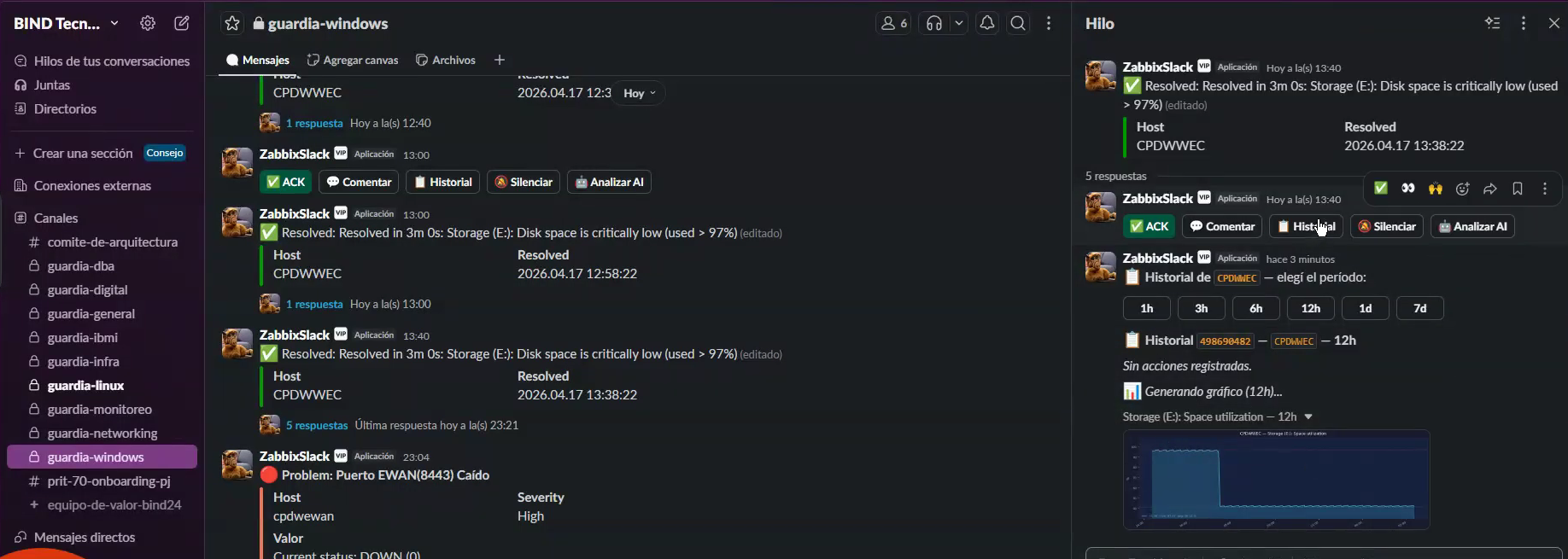
Based on that need, Custos developed additional features to automate part of the incident escalation process.
In certain situations, the system can initiate contact with the appropriate personnel, verify that the issue is being addressed, and continue to escalate the matter when necessary.
Thus, automation does not stop when a problem is detected.
You can also help ensure that the information reaches someone who can do something with it.
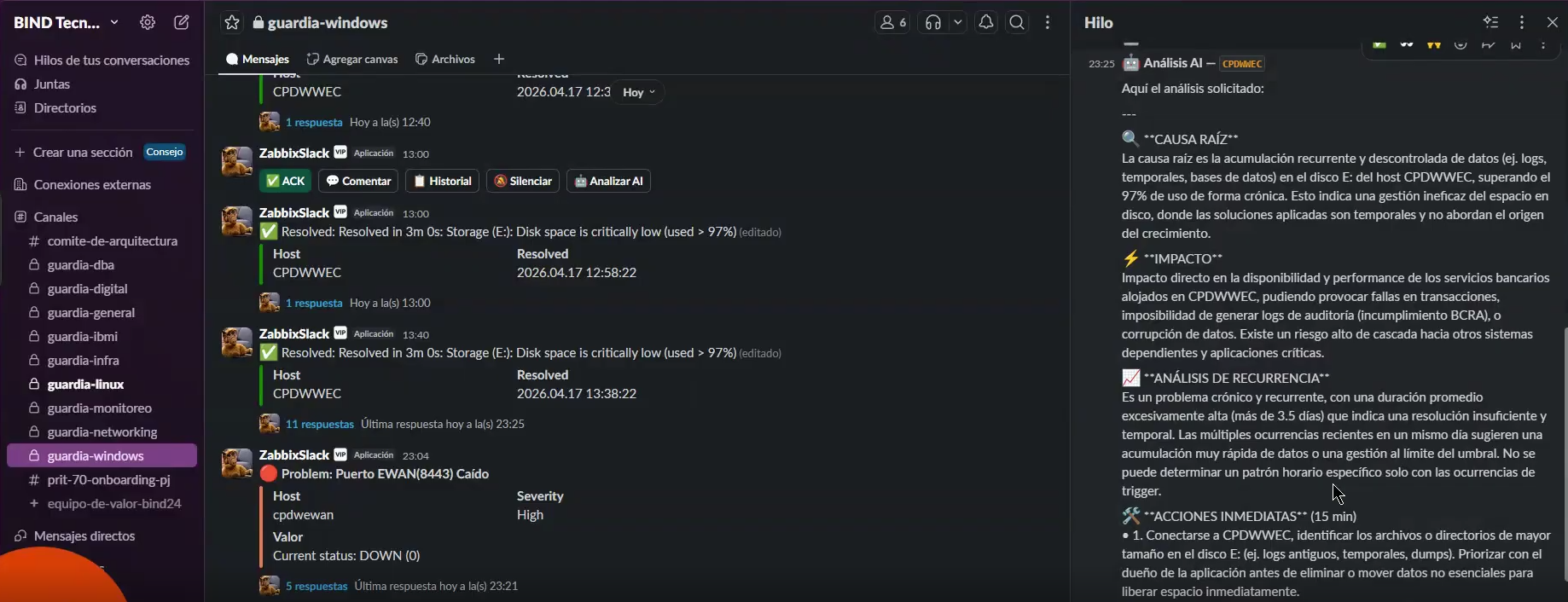
At first glance, they may seem like separate solutions.
But they all started the same way: by simplifying the task
First, the problem is identified; then, we define what should happen; and only then do we develop the technical solution.
That pattern also explains why the project grew organically.
There is no single configuration that can meet all of an organization's needs.
Every new situation requires understanding the context, talking with those who are familiar with the process, and determining what response makes sense to develop.
The impact of this phase of the project cannot be summarized by a single feature; it occurred at various levels of the operation.
But there is another, less visible impact that runs throughout the project's development:
each answer led to new questions.
As visibility increased, new needs arose.
These needs gradually expanded the scope of monitoring and its relationship to other organizational processes.
Monitoring thus began to play a role not only in detecting situations but also in shaping how information circulates, how users interact with it, and how a response is triggered when necessary.
It wasn't about adding technology; it was about making the technology respond better and better to the way the operation actually works.
One of the lessons learned from working with BIND is that effective monitoring doesn't operate in isolation; it can:
This changes the question of what it means to monitor.
It's no longer just about monitoring infrastructure and issuing alerts.
The goal is to gather information and ensure that it circulates, is put into context, reaches the right place, and can be turned into action when necessary.
After several years of collaboration, the various solutions built around BIND have taught us one common lesson.
Technology alone cannot determine what is important to an organization.
Anyone familiar with the business knows what to look for, which processes are relevant, what behaviors are to be expected, and when a situation requires attention.
Anyone familiar with monitoring can turn those needs into data, rules, integrations, automations, and solutions.
Value arises when those two forms of knowledge come together.
That is why, based on the Custos team's experience, working on monitoring is not just a matter of setting up a platform.
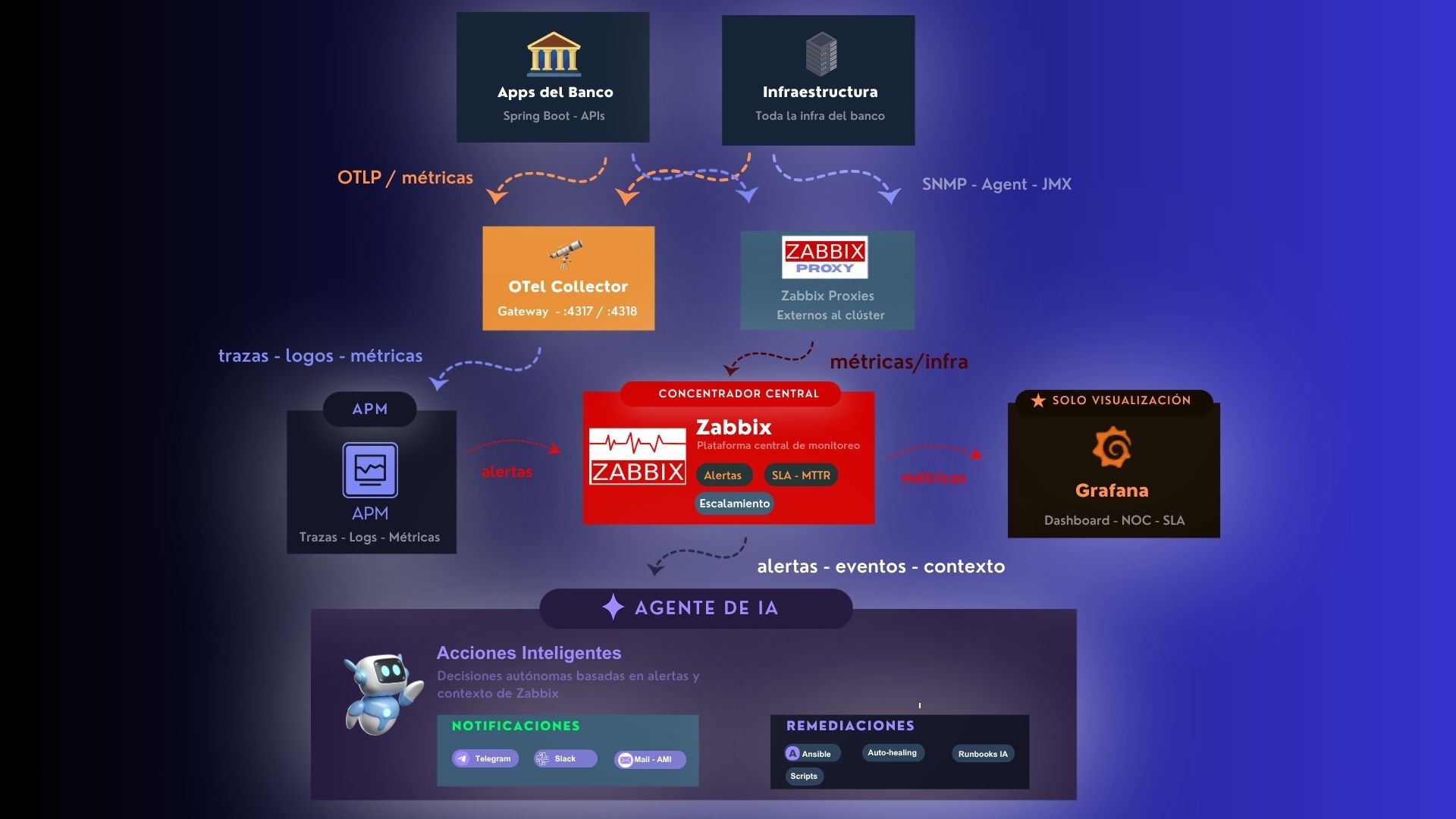
The work on BIND did not begin as a closed-source project, nor did it end when the first problem was solved.
Each new need expanded the scope of the project.
And some of those needs could be identified precisely because the journey we took allowed us to see things that had not been obvious before.
Today, the landscape also presents new challenges related to observability and the ability to link different sources of information to understand increasingly complex environments.
The tools will change.
New capabilities will emerge.
New needs will arise.
But the journey I've been on over the years remains:
Listen and understand the problem.
Identify what we’re missing.
Determine what other information is needed and how it complements the existing data.
Identify who needs the information and why.
Determine what should happen.
And only then should we build the technological solution.
It's about ensuring that monitoring evolves alongside the business.